Inspection & diagnosis
Access point
Any gap, opening, damaged component, or route a rodent or wildlife animal can use to enter a structure; often used interchangeably with entry point.
→ See Entry point.
Resources
Plain-language definitions for the terms used in rodent inspection, exclusion, cleanup, and prevention — from access point to zoonosis.
No terms match your search.
Inspection & diagnosis
Any gap, opening, damaged component, or route a rodent or wildlife animal can use to enter a structure; often used interchangeably with entry point.
→ See Entry point.
Home & building
A secondary residence on the same property as a primary home; its garage, crawl space, roofline, utilities, and exterior openings may create separate rodent access conditions.
Signs & activity
Current rodent presence supported by recent evidence such as sightings, new droppings, fresh gnawing, trap activity, or disturbed nesting material.
Signs & activity
Physical or sensory evidence of rodents, including droppings, urine odor, tracks, gnaw marks, rub marks, nesting material, sounds, and sightings.
Cleanup, safety & health
The process by which tiny particles from dust, droppings, urine, or contaminated debris become suspended in the air.
Home & building
A passage that carries heated or cooled air through a building and can be damaged or contaminated if rodents enter the system.
Sealing & exclusion
Closing uncontrolled air leaks in the building envelope; it can support energy efficiency but is not automatically rodent-proof unless durable, gnaw-resistant materials are used.
Cleanup, safety & health
A potentially harmful particle, droplet, allergen, or microorganism suspended in the air.
Cleanup, safety & health
A substance that can trigger an allergic response; rodent urine, dander, saliva, and waste may contain allergens.
Signs & activity
A sharp smell often associated with accumulated rodent urine, especially in enclosed or poorly ventilated spaces.
Trapping & control
A rodent poison that interferes with normal blood clotting; label restrictions and risks to children, pets, and wildlife make professional handling important.
Home & building
The space beneath a roof and above the occupied rooms, where warmth, insulation, and hidden travel routes can support rodent activity.
Cleanup, safety & health
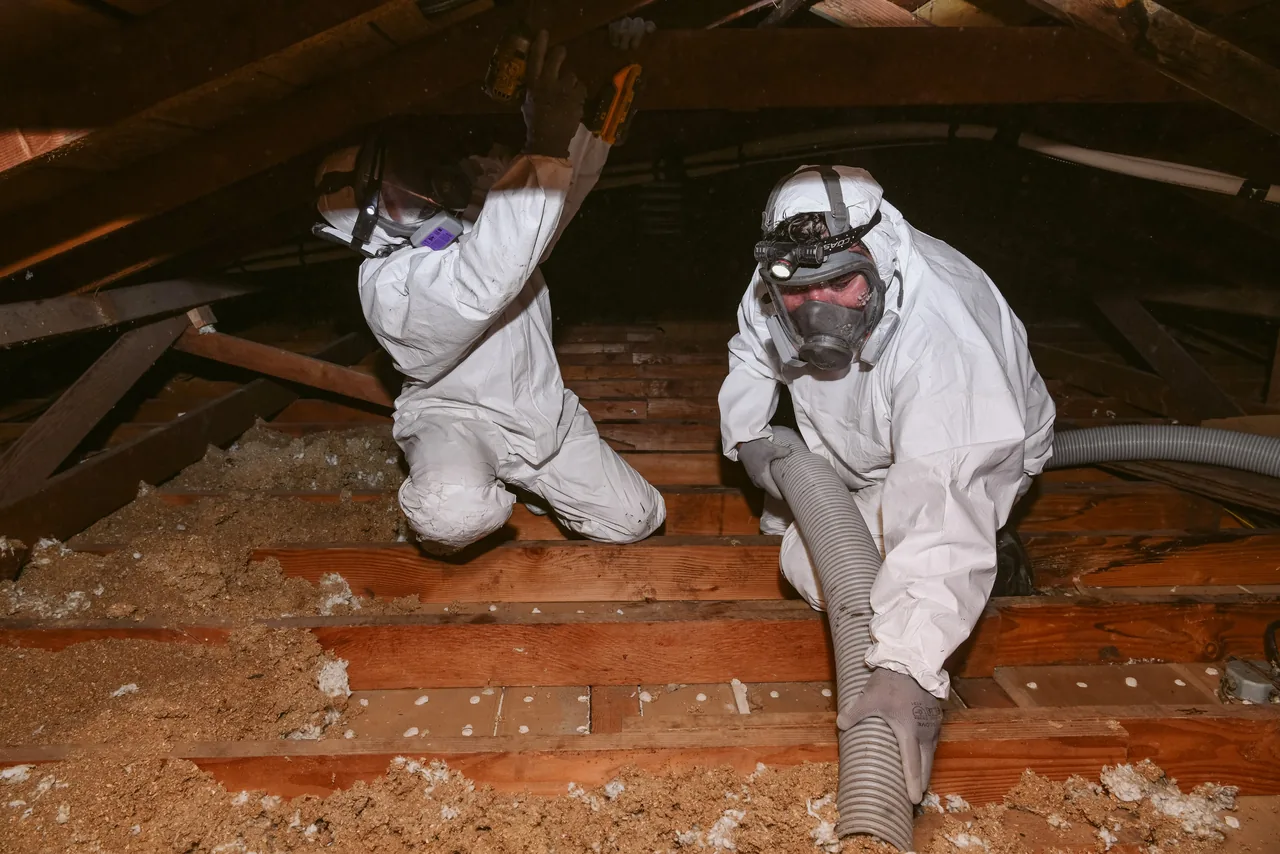
Removal of rodent waste, nesting debris, damaged materials, dust, and other contaminants from an attic, followed as appropriate by sanitation and restoration.
Prevention & upkeep
Anything that draws rodents to a property, such as accessible food, water, shelter, nesting material, warmth, or scent cues.
Trapping & control
Food or another attractant placed on or inside a trap or station to encourage rodent interaction.
Trapping & control
A secured container designed to hold bait or monitoring material while limiting access by people, pets, and non-target animals.
Home & building
A below-grade or partly below-grade area that may offer rodents shelter, moisture, storage clutter, and foundation access points.
Cleanup, safety & health
Removal of debris, rodent contamination, and damaged materials from a basement, followed by appropriate sanitation and disposal.
Insulation & moisture
Precut blankets or rolls of insulation, commonly fiberglass or mineral wool, installed between framing members.
Cleanup, safety & health
A biological substance that may pose a health risk; the term does not automatically mean all rodent waste is regulated medical waste.
Prevention & upkeep
Seed dropped beneath or around a feeder that can provide a concentrated food source for rats, mice, squirrels, and other wildlife.
Rodents & wildlife
A common name for Rattus rattus, the species also called the roof rat or ship rat.
→ See Roof rat.
Insulation & moisture
Loose insulation installed with blowing equipment to fill cavities or open attic floors; common materials include fiberglass and cellulose.
Rodents & wildlife
A common name for Rattus norvegicus, the species also called the Norway rat or sewer rat.
→ See Norway rat.
Signs & activity
A tunnel or chamber excavated in soil for shelter, nesting, food storage, or travel.
Cleanup, safety & health
The body of a dead animal; rodent carcasses should be handled and disposed of using appropriate protective and cleanup procedures.
Cleanup, safety & health
The controlled collection, bagging, and disposal of a dead rodent or other animal, followed by cleaning of the affected area when needed.
Sealing & exclusion
A flexible sealant used to close narrow joints and cracks; it may need backing or reinforcement where rodents could chew or push through.
Insulation & moisture
Loose-fill or dense-packed insulation made largely from recycled paper fiber and treated for fire and pest resistance.
Signs & activity
Marks left by rodent incisors on wood, plastic, wiring, packaging, ducts, or other materials; also called gnaw marks.
→ See Gnaw marks.
Home & building
Electrical wiring damaged by gnawing, creating a potential shock, equipment, or fire hazard that should be evaluated by a qualified electrician.
Cleanup, safety & health
Physical removal of dirt, waste, debris, and organic material from a surface; cleaning usually comes before sanitizing or disinfecting.
Service & process
The service phase that removes droppings, nests, carcasses, debris, and contaminated materials from affected areas.
Prevention & upkeep
Stored or discarded material that creates hidden shelter, nesting space, and difficult-to-inspect travel routes.
Rodents & wildlife
A rat or mouse species that commonly lives near people and benefits from human food, water, shelter, and structures.
Prevention & upkeep
Decomposing organic material that can attract rodents when food scraps are accessible or the pile is poorly managed.
Service & process
Alley Cat's detailed property report documenting observed activity, entry and exit points, damage, contamination, recommended work, and estimate information.
Cleanup, safety & health
The length of time a disinfectant or sanitizer must remain wet on a surface to work as directed by its label; also called dwell time.
Cleanup, safety & health
Barriers and work practices used to keep dust, debris, and contaminants from spreading beyond the cleanup area.
Insulation & moisture
Insulation affected by rodent urine, droppings, nesting, carcasses, odors, or physical damage.
Cleanup, safety & health
The presence of unwanted biological, chemical, or physical material on a surface, object, or area.
Home & building
The low area beneath a building floor, often containing soil, framing, utilities, ducts, and insulation.
Cleanup, safety & health
Removal of debris, waste, nesting material, and damaged components from beneath a building, followed by appropriate sanitation and repairs.
Cleanup, safety & health
The transfer of contaminants from an affected area, tool, shoe, glove, or material to a clean area.
Insulation & moisture
Insulation that is torn, compressed, displaced, nested in, contaminated, or otherwise unable to perform as intended.
Cleanup, safety & health
A process that removes, reduces, or neutralizes contamination so an area or item can be used more safely.
Rodents & wildlife
A small native mouse in the genus Peromyscus, often recognized by a two-tone body and tail; it is distinct from the common house mouse.
Cleanup, safety & health
Treatment intended to reduce or neutralize persistent odors after the source material has been removed and the area cleaned.
Service & process
A written summary of inspection findings, recommended scope, expected sequence of work, and projected price.
Cleanup, safety & health
A product registered or approved for killing specified microorganisms on labeled surfaces when used exactly as directed.
Cleanup, safety & health
Use of a disinfectant after cleaning to reduce or destroy labeled microorganisms on a surface.
Home & building
Open space around or beneath a door that can allow rodent entry when the door, threshold, sweep, or weatherstripping does not fit tightly.
Sealing & exclusion
A strip attached to the bottom of a door to close the gap above the threshold and reduce entry by rodents, insects, air, and debris.
Cleanup, safety & health
Placing sealed waste inside a second bag to add containment and reduce leakage or tearing during transport.
Signs & activity
Rodent fecal pellets that can indicate activity and contamination; size and shape may help narrow the likely species but are not definitive by themselves.
Cleanup, safety & health
Older or dehydrated rodent feces that may crumble easily and should not be swept or vacuumed before proper wetting and disinfection.
Home & building
An exterior exhaust opening for a clothes dryer that needs a functional animal-resistant cover without restricting required airflow.
Home & building
Holes, tears, disconnected sections, or contamination in HVAC ductwork caused or worsened by animal activity.
Home & building
The lower edge of a roof that overhangs the exterior wall and may contain gaps where roof, fascia, soffit, or siding components meet.
Trapping & control
A broad term for methods designed to reduce environmental impact, often emphasizing exclusion, sanitation, monitoring, and targeted trapping over routine toxicant use.
Trapping & control
A powered trap designed to kill a rodent with an electrical charge after it enters the device.
Inspection & diagnosis
A gap, hole, damaged component, or unprotected opening used by a rodent to enter a building.
Cleanup, safety & health
A disinfectant reviewed and registered by the U.S. Environmental Protection Agency for specific organisms, surfaces, and use directions stated on its label.
Signs & activity
Any observation suggesting rodent presence, including waste, damage, tracks, odors, sounds, nesting, burrows, trap results, or sightings.
Sealing & exclusion
Physical work that blocks animals from entering or re-entering a structure by sealing, screening, repairing, or reinforcing access points.
Service & process
A sequence that treats sealing the structure as the primary fix, with trapping and cleanup supporting that work rather than substituting for it.
Sealing & exclusion
A foam sealant that fills irregular voids; because rodents can chew exposed foam, it is typically reinforced with appropriate metal or repair material.
Inspection & diagnosis
A systematic review of the building perimeter, roofline, foundation, vents, utilities, vegetation, and other outside conditions that may support entry.
Trapping & control
Management of rodent activity and access conditions around the outside of a structure, including burrows, food sources, vegetation, and entry points.
Trapping & control
The killing or elimination of active pests; by itself, extermination does not necessarily correct contamination or entry points.
Service & process
A pest-control professional who performs elimination or control services; the exact service may or may not include exclusion, cleanup, or repairs.
Prevention & upkeep
Fruit left on the ground that can provide an easy, recurring food source for rats, mice, squirrels, and other wildlife.
Signs & activity
Animal waste from the digestive tract; rodent feces are commonly called droppings or scat.
→ See Droppings.
Insulation & moisture
Insulation made from fine glass fibers and sold as batts, rolls, or loose fill.
Cleanup, safety & health
A small blood-feeding ectoparasite that can live on rodents and other animals and may remain after a host is removed.
Inspection & diagnosis
A return visit used to review traps, verify repairs, check for new evidence, and confirm that activity is declining or resolved.
Prevention & upkeep
Any accessible item a rodent can eat, including trash, pet food, birdseed, fallen fruit, pantry goods, compost, and animal waste.
Home & building
The structural system that transfers a building's loads to the ground and may contain gaps, vents, joints, or penetrations used by rodents.
Sealing & exclusion
A reinforced exclusion assembly placed along or below a foundation to block surface or burrowing access.
Home & building
A screened opening that allows crawl-space ventilation and must remain functional while resisting animal entry.
Service & process
An initial no-charge property assessment offered by Alley Cat to identify activity, damage, contamination, and likely entry or exit points.
Signs & activity
Recently deposited-looking feces that may appear darker or less dry than older waste; appearance alone cannot safely prove age.
Trapping & control
Use of a gas or vapor pesticide within an enclosed area; it is different from structural exclusion and is not a substitute for sealing entry points.
Home & building
A ventilation opening in the triangular end wall beneath a roof peak that should be screened without blocking required airflow.
Home & building
Open space between building components that may allow air, water, insects, or rodents to pass.
Home & building
A vehicle or storage area that can provide rodents with food, water, clutter, warmth, and easy access through doors or wall gaps.
Trapping & control
A sticky trap that restrains an animal on an adhesive surface; it does not correct entry points and requires frequent, responsible monitoring where legal.
Signs & activity
Tooth marks made as rodents chew to access food or openings, gather material, or maintain their continuously growing incisors.
Signs & activity
Dark smudges left where oils and dirt from a rodent's fur repeatedly rub against a surface; also called rub marks.
Rodents & wildlife
A burrowing squirrel that lives primarily on or below ground and can damage yards, slopes, foundations, and landscaping.
Prevention & upkeep
Changing food, water, shelter, vegetation, clutter, or storage conditions so a property is less supportive of rodents.
Cleanup, safety & health
A group of viruses carried by certain rodents; exposure risk is associated with contact with contaminated urine, droppings, saliva, or airborne particles.
Rodents & wildlife
A place that provides pests with shelter, concealment, nesting space, or protection from weather and predators.
Sealing & exclusion
A rigid welded-wire mesh used to screen or reinforce openings; appropriate wire thickness, opening size, fastening, and edge treatment are important.
Service & process
Removal and off-site disposal of bagged debris, waste, damaged materials, and other project refuse.
Cleanup, safety & health
A high-efficiency particulate air filter designed to capture very small airborne particles when correctly installed and maintained.
Cleanup, safety & health
A vacuum equipped with HEPA filtration; rodent waste should be wetted and treated according to appropriate cleanup procedures before vacuuming.
Sealing & exclusion
Strengthening a building against pest or wildlife entry by repairing weak components and installing durable barriers at vulnerable locations.
Rodents & wildlife
Mus musculus, the small commensal mouse most commonly associated with homes and other occupied buildings.
Trapping & control
Control intended to minimize unnecessary suffering and non-target harm while resolving activity through appropriate trapping, exclusion, and prevention.
Home & building
A tube or channel that distributes conditioned air; damaged ducts can become travel routes or spread odors and particles.
Signs & activity
A pest population established in or repeatedly using a property at a level that requires corrective action.
Inspection & diagnosis
The condition or location driving activity, such as an entry point, food source, water source, nest, burrow, or nearby harborage.
Cleanup, safety & health
Breathing in airborne particles, droplets, allergens, or microorganisms during disturbance or cleanup.
Inspection & diagnosis
A systematic search for species clues, activity, damage, contamination, attractants, nesting areas, and entry or exit points.
Insulation & moisture
Material that slows heat flow through a building assembly; common types include fiberglass, cellulose, foam, and mineral wool.
Insulation & moisture
Controlled extraction and disposal of insulation that is contaminated, damaged, displaced, or no longer serviceable.
Insulation & moisture
Installation of new insulation after affected material is removed and underlying contamination or entry problems are addressed.
Insulation & moisture
Improvement of insulation type, amount, coverage, or installation quality to support better thermal performance after remediation.
→ See Mice in attic insulation.
Trapping & control
A decision-making approach that combines inspection, monitoring, prevention, sanitation, exclusion, and targeted control while reducing unnecessary risk.
Home & building
The open cavity between adjacent joists, often containing insulation, wiring, plumbing, or ducts.
Trapping & control
A trap designed to cause a rapid lethal capture, such as a properly sized snap or electronic trap.
Home & building
Rodent activity in food-preparation or storage areas, where prompt removal, sanitation, food protection, and entry correction are especially important.
Signs & activity
A location where rodents repeatedly deposit droppings and urine, creating concentrated contamination.
Cleanup, safety & health
A bacterial disease associated with infected animal urine and contaminated water or soil; rodents can be reservoir hosts.
Rodents & wildlife
A group of young born from one pregnancy.
Trapping & control
A trap that captures an animal alive; it must be checked frequently and used in accordance with animal-welfare and local legal requirements.
Prevention & upkeep
Ongoing maintenance, monitoring, sanitation, and repair intended to reduce the chance of renewed activity after initial control.
Cleanup, safety & health
A virus most commonly associated with the house mouse that can infect people through exposure to contaminated rodent material.
Sealing & exclusion
Rodent-proofing accomplished with physical materials and repairs rather than repellents or toxicants.
Sealing & exclusion
The dimensions of the openings in wire mesh or screen; smaller openings generally block smaller animals but must still allow required airflow or drainage.
Sealing & exclusion
Thin sheet metal shaped to cover joints, edges, and gaps, often used to reinforce roofline or exterior repairs.
Service & process
Services and practices used to identify, remove, and prevent mouse activity through inspection, sanitation, trapping, and exclusion.
Sealing & exclusion
Physical work that closes and reinforces the small openings mice use to enter a structure.
Home & building
Mouse activity in or around HVAC ductwork, potentially involving noise, odor, damage, nesting, and contamination.
Home & building
Mouse activity within attic insulation, where nesting, tunneling, droppings, urine, and compression can be difficult to see.
Signs & activity
An established or recurring mouse population in or around a property.
Trapping & control
Control directed specifically at mice, which reproduce quickly and enter through openings far smaller than those used by rats.
Service & process
Elimination or capture of mice from a property, ideally combined with cleanup and exclusion to prevent recurrence.
Insulation & moisture
Correction of leaks, standing water, condensation, drainage, or humidity conditions that support pests and damage building materials.
Inspection & diagnosis
Repeated observation of signs, traps, stations, or conditions to determine whether rodent activity is present, increasing, declining, or resolved.
Rodents & wildlife
A small rodent with a pointed snout, prominent ears, and long tail; mice can enter through very small openings and commonly nest near food and shelter.
Signs & activity
Small fecal pellets left by mice; they are evidence of activity and should be handled using safe wet-cleaning practices.
Service & process
A pest-control professional hired to eliminate mice; service scope may range from trapping to full cleanup and exclusion.
Trapping & control
A trap sized and designed for mice; it may not have enough size, force, or trigger geometry for an adult rat.
Trapping & control
A trap designed to capture more than one mouse before it must be emptied or reset.
Cleanup, safety & health
A filtering facepiece respirator rated for certain airborne particles; proper fit, selection, and use are necessary for protection.
Trapping & control
A naturally derived scent or material intended to discourage rodents; results are usually temporary and do not replace structural correction.
Rodents & wildlife
Caution or avoidance toward unfamiliar objects, foods, or changes; it can make rats slow to approach newly placed traps.
Rodents & wildlife
A sheltered site assembled or used for resting, breeding, and raising young.
Signs & activity
Soft or shredded material used to build a nest, such as paper, fabric, plant matter, insulation, or packaging.
Signs & activity
The location where a rodent establishes or uses a nest, often in a quiet, dark, insulated, or cluttered area.
Rodents & wildlife
Movement, foraging, or noise occurring after dark; many common rats and mice are primarily nocturnal.
Service & process
A disinfectant and sanitizer product listed in Alley Cat's SDS library; the current product label and Safety Data Sheet govern its use, dilution, contact time, and approved surfaces.
Trapping & control
A person, pet, wildlife species, or other organism not intended to contact a trap, bait, or control measure.
Rodents & wildlife
Rattus norvegicus, a heavy-bodied rat that commonly burrows at ground level and is also called the brown rat or sewer rat.
Rodents & wildlife
Wild animals whose presence creates property damage, contamination, noise, safety concerns, or conflict with people.
Cleanup, safety & health
Source removal, cleaning, ventilation, and treatment used to reduce smells from urine, droppings, nests, carcasses, or contaminated materials.
Cleanup, safety & health
A product intended to chemically reduce or bind odor molecules rather than simply cover them with fragrance.
Rodents & wildlife
An animal that eats both plant and animal material; rats and mice can use many different human and natural food sources.
Service & process
A service model designed to address an infestation and its access conditions in a defined project rather than through routine recurring applications.
Rodents & wildlife
A device that lets certain wildlife leave a structure but blocks return; correct species, timing, placement, and legal compliance are essential.
Cleanup, safety & health
A high-efficiency particulate filter class used with a compatible respirator; fit, cartridge selection, and a complete respiratory-protection approach determine actual protection.
Rodents & wildlife
A common name for woodrats in the genus Neotoma, known for collecting objects and building large stick nests.
Cleanup, safety & health
A microorganism or agent capable of causing disease under suitable conditions.
Trapping & control
A strong-scented essential oil sometimes used as a temporary rodent deterrent; it does not remove an infestation or seal entry points.
Cleanup, safety & health
Protective gear such as gloves, coveralls, shoe covers, eye protection, and respirators selected for the hazards of a task.
Service & process
The management of organisms that damage property, contaminate spaces, threaten health, or interfere with human activities.
Prevention & upkeep
A durable container with a tight-fitting lid that prevents rodents from reaching stored food, pet food, seed, or waste.
Trapping & control
A product intended to prevent, destroy, repel, or mitigate a pest; disinfectants and rodenticides are regulated as pesticides in the United States.
Trapping & control
The approved instructions and restrictions that legally govern where, how, and against what a pesticide may be used.
Prevention & upkeep
Food for companion animals that can become a major rodent attractant when left out, spilled, or stored in chewable packaging.
Rodents & wildlife
A chemical signal released by an animal that affects the behavior or physiology of other members of the same species.
Home & building
The gap where a pipe passes through a wall, floor, cabinet, roof, or foundation.
Trapping & control
A control approach that does not use rodenticide and instead relies on inspection, exclusion, sanitation, and targeted trapping.
Trapping & control
Placing bait on an unset trap until rodents feed confidently, then activating the trap without changing its location or presentation.
Prevention & upkeep
Steps taken to keep rodents from entering or becoming established, including exclusion, sanitation, maintenance, and monitoring.
Prevention & upkeep
Scheduled inspection, cleaning, vegetation management, and repair that addresses vulnerabilities before they lead to infestation.
Inspection & diagnosis
A final or follow-up review used to verify that cleanup, repairs, barriers, and trapping were completed as specified and remain effective.
Insulation & moisture
A measure of resistance to heat flow; higher R-values generally indicate greater insulating resistance under stated conditions.
Rodents & wildlife
A medium-sized mammal often involved in nuisance-wildlife work; it is not a rodent.
Rodents & wildlife
Removal or eviction of raccoons from roofs, attics, crawl spaces, or yards, followed by evaluation of damage, contamination, nesting, and entry points.
Rodents & wildlife
A larger rodent than a typical house mouse; common structure-infesting species in the Bay Area include the roof rat and Norway rat.
Service & process
Inspection, removal, trapping, sanitation, and exclusion used to stop current rat activity and reduce future access.
Signs & activity
Fecal pellets left by rats; their size and shape may suggest species, but safe handling and inspection context are still necessary.
Sealing & exclusion
Physical work that blocks and reinforces the openings and routes rats use to enter a structure.
Service & process
A professional hired to eliminate rats; service scope should be reviewed to determine whether cleanup, repairs, and prevention are included.
Signs & activity
An established or recurring rat population using a property for food, water, shelter, nesting, or travel.
Trapping & control
Control directed specifically at rats, accounting for their size, climbing and burrowing habits, and the larger gaps they can exploit.
Service & process
Elimination or capture of rats from a property, ideally followed by contamination cleanup and entry-point correction.
Trapping & control
A trap sized and designed for rats; it is generally larger and stronger than a mouse trap.
Cleanup, safety & health
A bacterial illness that can follow a bite, scratch, or other exposure to infected rodents.
Signs & activity
A rodent's return through an existing, reopened, damaged, or newly created access point after control work.
Signs & activity
Renewed pest activity after a previous infestation was reduced or removed.
Sealing & exclusion
Adding durable material, fasteners, backing, or framing so an exclusion repair resists chewing, pulling, weather, and movement.
Inspection & diagnosis
A later inspection that compares current conditions with earlier findings and checks for new signs or failed repairs.
Cleanup, safety & health
Cleanup, removal, repair, and restoration performed to correct contamination or damage caused by pests.
Trapping & control
A product or stimulus intended to discourage an animal from approaching or using an area; results vary and are usually temporary without exclusion.
Cleanup, safety & health
An animal species that naturally carries and maintains a pathogen, sometimes without obvious illness.
Cleanup, safety & health
Protective equipment worn over the nose and mouth to reduce inhalation exposure; the correct type and fit depend on the hazard.
Rodents & wildlife
A mammal in the order Rodentia, characterized by continuously growing front incisors; rats, mice, squirrels, voles, and woodrats are rodents.
Signs & activity
Any current or past evidence that rodents are feeding, traveling, nesting, gnawing, burrowing, or entering a property.
Cleanup, safety & health
Removal and decontamination of droppings, urine, nesting material, and soiled insulation left behind by rodents, using protective equipment and controlled handling.
Cleanup, safety & health
Removal of droppings, urine-affected debris, nests, carcasses, and contaminated or damaged material using controlled cleaning practices.
Cleanup, safety & health
Waste, allergens, microorganisms, odor, nesting material, or carcass residue left by rodent activity.
Service & process
The overall management of rodent activity through inspection, sanitation, trapping or removal, exclusion, and ongoing prevention.
Home & building
Physical harm caused by chewing, nesting, burrowing, contamination, or displacement of wiring, ducts, insulation, wood, packaging, or other materials.
Cleanup, safety & health
Treatment of rodent-affected areas to reduce or remove contamination after source material and debris are addressed.
Sealing & exclusion
A construction-based control method that seals, screens, repairs, and reinforces rodent access points to prevent entry or re-entry.
Trapping & control
Elimination of active rodents, usually through trapping or regulated pesticides; it does not necessarily include cleanup or proofing.
Inspection & diagnosis
A property assessment focused on species evidence, entry and exit points, nesting, damage, contamination, attractants, and travel routes.
Trapping & control
Management of rat and mouse activity in and around a structure, combining inspection, trapping, sanitation, and the sealing of entry points.
Sealing & exclusion
Another term for rodent exclusion, emphasizing durable changes that make a structure resistant to rat and mouse entry.
Service & process
The capture, elimination, or physical removal of rodents from a property, often paired with exclusion and cleanup.
Trapping & control
Use of appropriately selected and placed traps to capture or eliminate rodents as part of a broader control plan.
Sealing & exclusion
Door or opening seal material designed with metal or other reinforcement to better resist gnawing than standard soft weatherstripping.
Trapping & control
A pesticide designed to kill rodents; use is controlled by the product label and may pose risks to children, pets, and wildlife.
Inspection & diagnosis
A gap or damaged component at shingles, flashing, eaves, vents, chimneys, roof intersections, or penetrations that allows access.
Rodents & wildlife
Rattus rattus, a slender, agile rat that often travels above ground and nests in attics, trees, dense vegetation, and elevated voids.
Home & building
The edges, ridges, valleys, eaves, fascia, soffits, vents, and transitions that form the perimeter and profile of a roof.
Signs & activity
A frequently used rodent travel path, often following walls, pipes, edges, vegetation, or sheltered linear features.
Cleanup, safety & health
A standardized document describing a chemical product's hazards, protective measures, handling, storage, first aid, and emergency information.
Cleanup, safety & health
Illness caused by Salmonella bacteria, which can spread through contaminated food, surfaces, water, or animal waste.
Cleanup, safety & health
Cleaning and source-reduction practices that remove waste, food, odors, and conditions supporting pests; the term is broader than applying a sanitizer.
Service & process
The Alley Cat process phase that follows cleanup and uses labeled products and controlled methods to reduce contamination and odor in affected areas.
Rodents & wildlife
An odor pathway created by urine, gland secretions, body oils, or repeated travel that may guide rodent movement.
Signs & activity
Scraping, gnawing, or movement sounds from a hidden area that can prompt inspection for rodents or wildlife.
Service & process
The Alley Cat process phase focused on closing entry points, strengthening vulnerable areas, and reducing future access.
Sealing & exclusion
A material applied to joints and gaps to block air, water, or pests; selection depends on movement, weather exposure, substrate, and gnaw risk.
Sealing & exclusion
Closing a gap or joint with compatible material; rodent exclusion may also require reinforcement, fastening, screening, or structural repair.
Trapping & control
Toxic exposure that occurs when a predator or scavenger eats an animal containing rodenticide residues.
Service & process
Written coverage for specified post-service conditions, subject to the current agreement's duration, exclusions, maintenance requirements, and claim process.
Rodents & wildlife
A common name for the Norway rat, reflecting its frequent use of sewers, drains, and ground-level burrows.
→ See Norway rat.
Sealing & exclusion
Flat metal cut and formed to cover or reinforce openings, edges, and vulnerable building components.
Rodents & wildlife
Another common name for the roof rat or black rat, Rattus rattus.
→ See Roof rat.
Trapping & control
A spring-powered trap designed to strike and kill a rodent quickly when correctly sized, placed, and maintained.
Home & building
The underside of a roof overhang; gaps, damage, or loose panels can provide access to eaves and attics.
Prevention & upkeep
Removal or control of the food, water, shelter, clutter, and access conditions that sustain pest activity.
Sealing & exclusion
An expanding foam insulation or sealant; exposed foam alone is generally not a durable rodent barrier.
Rodents & wildlife
A rodent in the family Sciuridae; tree squirrels may enter attics or roof spaces through elevated openings.
Rodents & wildlife
Removal or exclusion of squirrels from a structure, followed by nest, damage, contamination, and access-point evaluation.
Sealing & exclusion
A bundle of fine steel fibers sometimes used to pack small gaps; it can rust or be pulled out and is typically secured and sealed as part of a repair.
Trapping & control
An individual rodent that remains inside after major entry points are sealed or most of the population has been removed.
Home & building
Damage to framing, foundation, roofing, wiring, ducts, or other building components that may affect function, safety, or pest resistance.
Home & building
A hole, crack, separation, deterioration, or construction weakness that creates or contributes to animal access.
Sealing & exclusion
Permanent or long-lasting repair work that makes building assemblies resistant to pest and wildlife entry.
Rodents & wildlife
The tendency to stay close to walls or objects while moving, which helps explain why rodent runways and trap placements often follow edges.
Home & building
The water-filled curved passage in a toilet that blocks sewer gases; unusual plumbing defects or sewer conditions can sometimes allow rat access.
Trapping & control
Rodent management that excludes poison and emphasizes inspection, trapping, sanitation, habitat modification, and repairs.
Trapping & control
A scheduled inspection of traps to remove captures, reset devices, replace bait, document results, and adjust placement.
Trapping & control
The location and orientation of a trap in relation to walls, runways, signs, shelter, and non-target risks.
Trapping & control
Avoidance of a trap after a frightening or unsuccessful encounter; related caution toward new objects is called neophobia.
Trapping & control
The distance between traps, chosen according to species, activity level, travel routes, site layout, and device type.
Trapping & control
Capture or elimination of rodents with mechanical or electronic devices; effective trapping depends on identification, placement, monitoring, and exclusion.
Prevention & upkeep
A container for household or commercial waste that should be intact, clean, and fitted with a secure lid to limit rodent access.
Prevention & upkeep
Keeping waste in intact containers with secure lids, cleaning spills, and removing refuse often enough to limit food and shelter.
Prevention & upkeep
Pruning or maintaining branches away from roofs and walls to reduce overhead animal access while protecting tree health.
Sealing & exclusion
Excavating a narrow channel beside a foundation or vulnerable edge so an underground exclusion barrier can be installed.
Service & process
An Alley Cat maintenance reminder that combines secure trash, monitored traps, and regular yard cleanup to help discourage renewed activity.
Trapping & control
A device marketed to emit high-frequency sound that discourages pests; results can be inconsistent and it should not replace exclusion or sanitation.
Sealing & exclusion
A durable mesh or solid barrier installed below grade to block burrowing animals from reaching a foundation, crawl space, or protected area.
Home & building
A basement with exposed framing, masonry, soil, utilities, or mechanical systems rather than fully finished walls and floors.
Cleanup, safety & health
Rodent feces that have not been wetted and disinfected; they should not be swept or vacuumed dry.
Signs & activity
Liquid waste that can leave stains, odor, allergens, and contamination on surfaces and materials.
Signs & activity
A sharp or musty smell caused by rodent urine and its breakdown products, often strongest in enclosed or heavily used areas.
Home & building
An opening where electrical, gas, water, communications, drainage, or HVAC services pass through a building assembly.
Cleanup, safety & health
The procedure governing when and how vacuum equipment is used during cleanup; dry, untreated rodent waste should not be vacuumed.
Insulation & moisture
A low-permeance material installed to limit water-vapor movement through a building assembly; in crawl spaces, it commonly covers exposed soil.
Insulation & moisture
Placement, overlap, sealing, fastening, and detailing of vapor-control material to manage ground moisture in a crawl space or other assembly.
Insulation & moisture
The building-science term for a material that slows water-vapor diffusion; its required permeance and location depend on climate and assembly design.
Cleanup, safety & health
An organism, often an arthropod such as a flea or tick, that can transmit a pathogen between hosts.
Prevention & upkeep
Branches, vines, shrubs, or other plants that create a continuous path from the ground or nearby structure to a roof, wall, or opening.
Prevention & upkeep
Pruning, thinning, cleanup, and placement practices that reduce hidden shelter, food, and direct access to structures.
Home & building
An opening or duct designed to move air or gases; it should not be sealed when required for building function, but it can be protected with compatible screening.
Sealing & exclusion
A grille, cap, hood, or screen installed over a vent to protect the opening while maintaining required airflow.
Insulation & moisture
Controlled movement of air into and out of a space to manage moisture, odors, temperature, and airborne contaminants.
Rodents & wildlife
A small, stocky outdoor rodent that makes surface runways and can damage lawns, roots, and landscaping.
Home & building
The concealed cavity between wall surfaces and framing, often used by rodents as a travel route.
Prevention & upkeep
Any accessible water, including leaks, pet bowls, standing water, condensation, irrigation, drains, and plumbing fixtures.
Sealing & exclusion
Flexible material around doors or windows that seals gaps; rodent-prone locations may need reinforced, gnaw-resistant versions.
Home & building
A designed opening that lets water drain or air move from a wall assembly; it should not be sealed indiscriminately, but may accept a purpose-made pest-resistant insert.
Cleanup, safety & health
A cleanup approach that wets contaminated waste and surfaces with an appropriate disinfectant before controlled removal to reduce airborne dust.
Inspection & diagnosis
An assessment that considers interior and exterior areas together so travel routes and multiple entry points are not evaluated in isolation.
Rodents & wildlife
Physical work that blocks wildlife access to a structure, often using species-specific one-way devices and repairs.
Rodents & wildlife
The capture, eviction, or relocation of nuisance wildlife in accordance with species needs, animal-welfare practices, and applicable law.
Sealing & exclusion
Woven or welded wire used to screen vents, close openings, and reinforce exclusion repairs.
Rodents & wildlife
A native rodent in the genus Neotoma, also called a pack rat, known for collecting material and building stick nests.
→ See Pack rat.
Service & process
The Alley Cat process phase that includes debris removal, a final walkthrough, explanation of completed work, and project closeout.
Prevention & upkeep
A low-water landscaping approach; regardless of water use, dense groundcover, seed, fruit, or debris can still create rodent food or shelter.
Prevention & upkeep
Regular pickup, pruning, storage, drainage, and food-source management used to reduce outdoor rodent support.
Prevention & upkeep
Cleanup and waste-management practices that remove accessible food, pet waste, spilled seed, fallen produce, and harborage.
Cleanup, safety & health
An infectious disease that can pass naturally between animals and people.
Cleanup, safety & health
Another term for a zoonosis - an illness transmitted between animals and humans directly, indirectly, or through vectors.
→ See Zoonosis.
Book your free inspection online.